

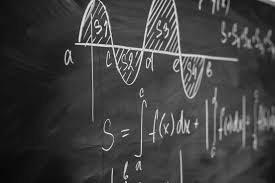

Calculus is the most powerful weapon of thought yet devised by the wit of man – Willace B Smith
Calculus is the study of continuous change; it is the language of life and creation. The only constant in life is change and calculus is a way to quantify that change. Whether you’ve taken calculus, are about to take it, or never plan on taking it, here are some important inventions/discoveries made possible with calculus.
1) Classical Physics
Calculus was discovered by Isaac Newton back in the late 1600s. He was challenged with explaining planetary motion (ultimately gravity) and had a difficult time solving it using basic mathematic concepts in his time, so he found a new method, which he originally called “Method of Fluxions”. With all that being said, this breakthrough in the scientific and mathematical world lead to tremendous discoveries in predicting and solving physical phenomena, that were previously difficult to quantify. Here are some of the note worthy physics topics brought about by Calculus:
- Gravity – Newton’s Law of Universal Gravitation
- Fluid Mechanics – Bernoulli’s Equation
- Thermodynamics
- Statics/Dynamics – The affect of forces on motion (Newton’s second law of motion)
- Precise Kinematics – (Motion, focusing on the relationship bewtween: position, velocity, and acceleration with respect to time)


2) Economics
As you probably know, economies and businesses are constantly going through ups and downs (or changes). Calculus quantifies rates of change, max and mins, optimization, etc. An understanding of calculus will also boast your understanding of economic concepts and an outcome is affected by certain variables. Not to mention, a lot of the general relationships/equations between interest rates, time, principle investments, etc., were originally derived from calculus. Even though economist might not use calculus, the models and methods their using is built on it.
Think of how Netflix uses calculus derived algorithms to optimize pricing during peak hours- surge pricing isn’t random; it’s the result of marginal cost analysis.
3) Statistics
Statistics and calculus are deeply intertwined, especially in theoretical and advanced applications. While basic descriptive statistics (like means and medians) can often stand alone, many core concepts in probability theory and inferential statistics rely on calculus for rigorous definitions, derivations, and computations. Calculus provides the tools to handle continuous change, accumulation, and optimization—essential for modeling real-world data that isn’t discrete.
4) Business
Calculus is very useful for marginal revenues and costs, which can ultimately help business owners/managers maximize their profits. It is also heavily used in logistics for optimizing supply chains, particularly in minimizing costs, managing inventory, and predicting demand by analyzing rates of change and finding optimal production level. Like economists and statisticians, business owners will likely not use calculus in there everyday work or at all, but like the other two professions, calculus is engrained in the foundation of their software, programs, models, etc..
As economist Paul Samuelson said, ‘Mathematics brought rigor to economics- almost entirely through calculus.”
5) Medicine
Calculus can be used to predict how medicine will act once in the body. This includes the rate of absorption, distribution, metabolism, and extrusion and how they all affect each other. It is also used as a mathematical framework to track the spread of disease (epidemiology). Calculus is also useful in physiology, it allows professionals to measure blood pressure, heart rate, etc..
During the COVID-19 pandemic, epidemiologists used differential equations (a calculus tool) to model infection rates and predict peak waves.
Conclusion
It’s difficult to find a topic/subject that does not have calculus integrated in it. From AI chat bots to phone navigation systems. Calculus is used to predict the path your 3D printer takes to build your model, predicting the weather on your weather app, video game mechanics, and simply tracking your heart rate and relating it to calories burned. It is an integral part of the global infrastructure and learning it will help you in understanding the world better.
Ready to dive in? Start with Khan Academy’s free calculus course or Stewart’s ‘Calculus’ textbook. What’s one change in your life you’d model with Calculus?